
In brief
A long ingredient list or a high percentage on the front does not automatically make a food better. Start by checking whether it is complete, which life stage it is intended for and how the analytical values should be compared.
Complete or complementary?
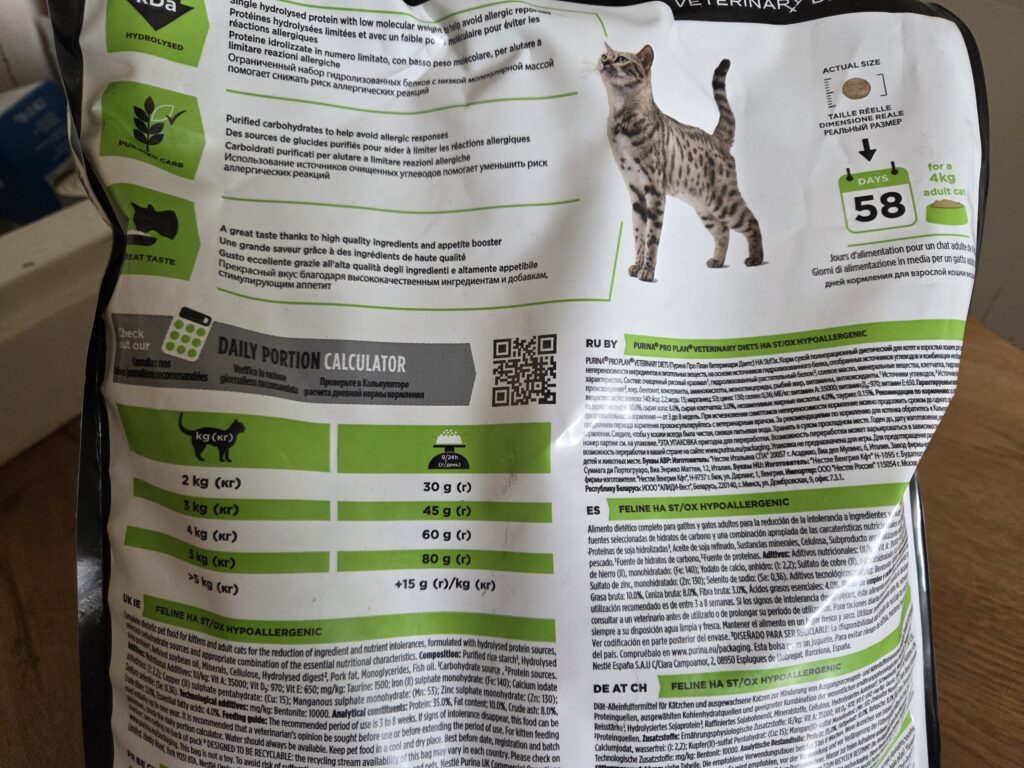
A complete food is formulated to provide all essential nutrients when fed as directed. Complementary foods, many snacks and some tins are not nutritionally complete and should not make up the main diet unless balanced by a veterinary nutritionist.
Ingredients versus nutrients
Ingredients are listed by weight before processing. This can make water-rich meat appear prominent and can split similar carbohydrate ingredients across several names. Cats need nutrients in appropriate amounts and proportions; the ingredient list alone cannot prove nutritional quality.
Compare foods on a dry-matter basis
Wet and dry food contain very different amounts of water. Directly comparing percentages on the label can therefore be misleading. Removing moisture mathematically gives a fairer comparison, although it still does not tell you digestibility or biological value.
Useful checks
- Is the product labelled as complete for your cat’s life stage?
- Is there a clear manufacturer and contact route?
- Are feeding guidelines present and is your cat maintaining a healthy weight?
- For medical conditions, does the diet match the veterinary goal rather than a marketing claim?
Conclusion
Read labels as one part of the picture. Completeness, suitability, quality control, the cat’s health and how well the food is tolerated matter more than fashionable ingredient claims.
Kleine veranderingen eerder zien
Ontvang direct Pip's Senior Cat Check, twee korte welkomsttips en daarna ongeveer één keer per maand begrijpelijke kattenkennis van Pip en Marieke.
Pip’s Post wordt klaargezet. Inschrijven opent zodra de e-mailverbinding betrouwbaar is getest.