
In brief
Do not choose a kitten with your heart alone — difficult though that is when faced with a tiny feline face. Look at origin, the mother cat, living environment, socialisation and available health information. Ask questions, request documentation and never allow yourself to be rushed. A kitten may look healthy while not every condition is visible from the outside. This guide helps you ask better questions; it cannot provide a health guarantee.
First: does a kitten suit your life?
A kitten is funny, curious and usually rather persuasive. A kitten is also a young animal who needs guidance, safe play, socialisation, appropriate nutrition and veterinary care. You are not choosing a few adorable months, but potentially fifteen to twenty years of responsibility.
Before visiting, consider:
- The time available for daily play, care and guidance
- Whether your home can be made safe and cat friendly
- Children and other animals in the household
- Holiday care and likely future changes
- Routine and unexpected veterinary costs
- Whether an adult cat might be a better match.
If you are unsure, first use our kitten, adult or senior cat matching guide on How do you keep your cat healthy?. It is a conversation starter, not a validated matching test.
Where has the kitten come from?
A traceable, responsible origin matters more than unusual colour, a fashionable breed or immediate availability.
When visiting a home-bred litter, ideally see where the kittens actually grow up. Under normal circumstances, the mother cat should be present. The father may legitimately live elsewhere, for example when another breeder’s male was used.
Look beyond the kitten who first catches your eye. Observe the whole litter, the mother and the environment:
- Is the environment clean and safe?
- Are there suitable litter trays, resting places and opportunities to play?
- Are the kittens calmly exposed to people and ordinary household experiences?
- Can the caregiver describe each kitten’s behaviour?
- Are you given time to look and ask questions?
A reputable rescue is also an excellent place to find a kitten or adult cat. The full history may not be known, but a responsible organisation will distinguish clearly between what is known and what remains uncertain.
How old should a kitten be when it moves home?
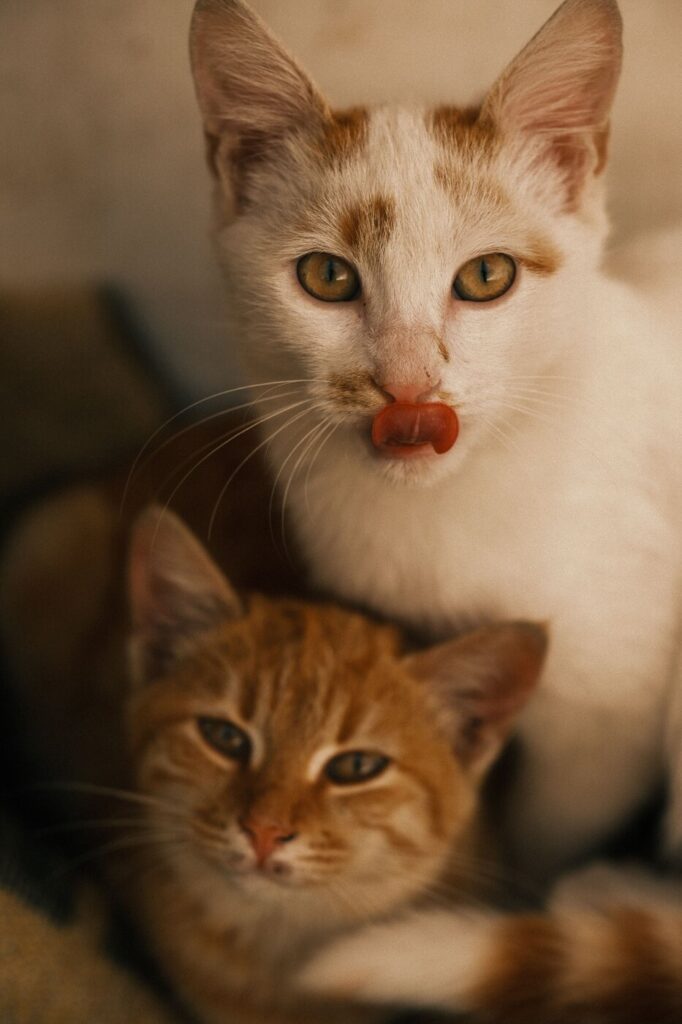
In the Netherlands, the legal minimum age for separating a kitten from its mother is seven weeks. That legal minimum is not automatically the best age for moving home. Preferably choose a kitten that moves at around 12–14 weeks. During those additional weeks, kittens can continue learning from their mother and littermates while the caregiver supports positive socialisation, independent eating and reliable litter tray use.
Pedigree kittens must also meet the rules of the association with which the breeder is registered. FIFe and Mundikat currently require a minimum age of 14 weeks; some other Dutch associations use 13 weeks. Ask which organisation issues the pedigree and check its current rules. Age alone is not sufficient: the kitten should be healthy, fully weaned, appropriately vaccinated and ready for the transition. A veterinarian may advise differently in an individual case for health or welfare reasons.
Can you tell whether a kitten is healthy by looking?
Not completely. An alert, playful and well-cared-for kitten is naturally more reassuring than a kitten who appears unwell. However, brief observation is not a veterinary examination. Congenital abnormalities, inherited disorders and some infections may be present without obvious signs.
Find out more and avoid a rushed decision if you notice:
- Discharge from the eyes or nose
- Repeated sneezing, coughing or unusual breathing
- Diarrhoea or a soiled hind end
- A dull coat, bald areas, crusting or marked itchiness
- Unusual lethargy or poor response to the environment
- Clearly falling behind littermates
- Difficulty walking or an unusual posture.
One sign does not establish a diagnosis. Ask what is known, whether a veterinarian has examined the kitten and whether you may see the report. Do not accept unexplained illness being dismissed as “probably just stress”.
Which health information should you request?
Ask for original documentation that can be matched to the individual kitten.
Identity and preventive care:
- Date of birth and known medical history
- Records of veterinary examinations
- Vaccinations already given
- Parasite-control history or faecal-test results
- Microchip number and registration, if chipped
Daily and additional information:
- Current food
- Medication or supplements
- Previous signs or treatment
- Agreements about neutering and follow-up
- For a pedigree kitten, pedigree documents and relevant parental screening results.
Vaccination and parasite-control schedules are not identical for every kitten in every setting. Age, origin, region, environment and infection risk matter. Discuss the next steps with your own veterinarian after adoption.
Inherited disease: ask specific questions
Certain inherited disorders occur more often in particular breeds or family lines. Appropriate screening varies by breed and sometimes by country or registry.
Ask:
- Which relevant disorders occur in this breed or line?
- Which parents were screened, by which method and when?
- Can you see the original result and identity of the tested animal?
- What does that result mean for this particular mating?
“The parents are tested” is not enough by itself. A DNA test, echocardiographic examination or other screening test answers a specific question. A normal result may reduce a particular risk, but cannot guarantee lifelong health.
What about socialisation and behaviour?

A well-socialised kitten does not have to climb into every visitor’s lap. Temperament, previous experience and time of day affect behaviour. Look for the ability to show curiosity, recover after a mild surprise and interact appropriately with people, play and the environment.
Ask whether the kittens have calmly experienced:
- Different people and gentle handling
- Ordinary household sounds
- A carrier
- Brief handling of paws, coat and mouth
- Children, dogs or other cats, where relevant.
Not every kitten needs exposure to every possible experience. Honest information helps you assess whether transition to your household is realistic.
One kitten or two?
There is no automatic answer. Two socially compatible kittens may play together, but two cats also mean greater cost, adequate space and multiple separated resources. Not every cat wants to share a home with another cat.
Base the decision on the kittens’ relationship, age, personality, environment and advice from the rescue or breeder. Avoid treating either “two is always better” or “cats are always solitary” as a universal rule.
Red flags
Origin and documentation:
- Immediate payment or collection is demanded
- You cannot see the real living environment
- The kitten’s origin or identity remains unclear
- The mother can never be seen without a credible explanation
- Documents are unavailable or do not appear to match the kitten
Communication and pressure:
- Health concerns are dismissed without explanation
- Questions are discouraged
- The seller has no interest in your home situation
- Pressure is created through discounts, scarcity or an emotional story.
Wanting to “rescue” a kitten by buying is understandable, but payment may reward irresponsible trade. If welfare concerns you, seek advice from the relevant animal-welfare authority or organisation in your country.
Before coming home
- Choose a veterinary practice and ask when an initial examination is appropriate.
- Ask which food and litter the kitten currently uses; avoid changing everything on moving day.
- Prepare a quiet first room with hiding and resting places, scratching opportunity, food, water and a litter tray.
- Check windows, balconies, toxic plants, cables and small objects.
- Introduce other animals gradually.
- Keep contracts, microchip information and medical records together.
Final thought
The aim is not to become your own veterinarian. It is to observe calmly, ask better questions and obtain information that helps you and your veterinarian make good decisions.
A responsible caregiver will not resent careful questions. They want the kitten to find the right home too.
Still choosing between a kitten, adult or senior cat? Try the guide on How do you keep your cat healthy?.
For occasional friendly, reliable feline information, subscribe to Pip’s Post. No daily spam — just useful guidance that helps you notice your cat.
Medical disclaimer
This information does not replace examination or advice from your own veterinarian. If a kitten appears unwell or you are concerned about breathing, appetite, alertness, diarrhoea or movement, contact a veterinarian.
Sources
- LICG. De aanschaf van een kat. https://www.licg.nl/katten/de-aanschaf-van-een-kat/
- LICG. Praktisch – De kitten-checklist. https://www.licg.nl/media/gtvcpntg/kittenchecklist5_3et.pdf
- Dutch Society for the Protection of Animals. Een kitten adopteren? https://ikzoekbaas.dierenbescherming.nl/tips/katten/een-kitten-adopteren
- Netherlands Enterprise Agency. Hoe zorgt u goed voor uw kat? https://www.rvo.nl/onderwerpen/dieren-houden-verkopen-verzorgen/goede-zorg-voor-uw-kat
- Quimby JM et al. 2021 AAHA/AAFP Feline Life Stage Guidelines. https://catvets.com/resource/aaha-aafp-feline-life-stage-guidelines/
- Squires RA et al. 2024 WSAVA Guidelines for the Vaccination of Dogs and Cats. https://wsava.org/global-guidelines/vaccination-guidelines/
- Netherlands Food and Consumer Product Safety Authority (NVWA). Buying and caring for dogs and cats. https://www.nvwa.nl/onderwerpen/dier/honden-en-katten/honden-en-katten-kopen-en-verzorgen
- FIFe. Breeding & Registration Rules – re-homing of kittens. https://fifeweb.org/health-welfare-rules/
- Mundikat. Basic rules of cat associations. https://www.mundikat.nl/index.php/de-basisregels/
—
Kleine veranderingen eerder zien
Ontvang direct Pip's Senior Cat Check, twee korte welkomsttips en daarna ongeveer één keer per maand begrijpelijke kattenkennis van Pip en Marieke.
Pip’s Post wordt klaargezet. Inschrijven opent zodra de e-mailverbinding betrouwbaar is getest.