
In brief
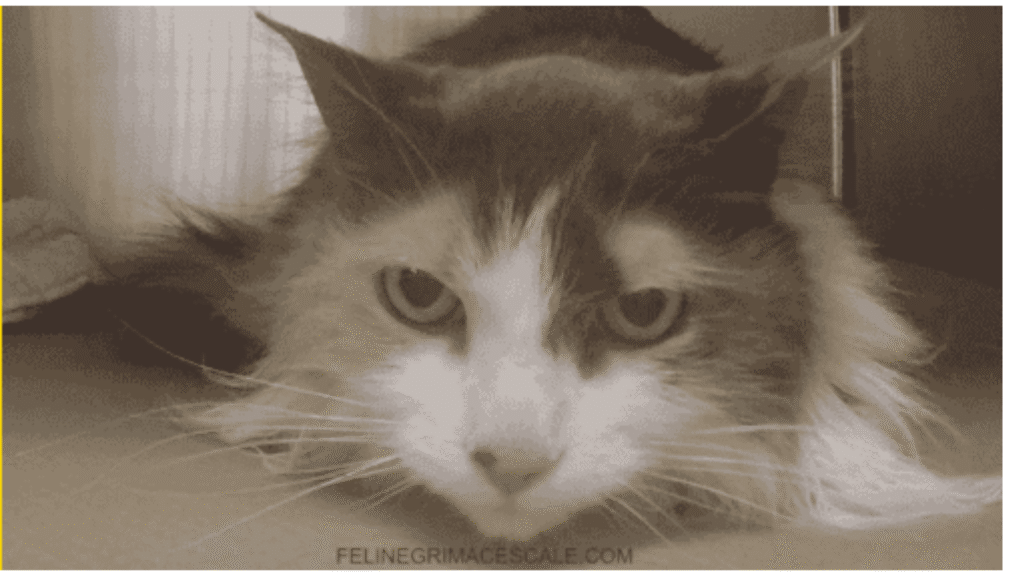
Cats often show pain subtly. The Feline Grimace Scale evaluates five facial features and can help professionals and owners recognise acute pain more consistently.
The five facial action units
- Ears: relaxed and forward versus rotated outward or flattened.
- Eyes: open versus partly or fully narrowed.
- Muzzle: relaxed and rounded versus tense and flattened.
- Whiskers: relaxed and curved versus straight, forward or clumped.
- Head position: above the shoulders versus level with or below them.
How it is used
Each feature is scored from absent to obvious. The combined score helps guide whether analgesia or reassessment may be needed. Observation should be calm and brief because handling and fear can change facial expression.
What the scale cannot do
It was developed primarily for acute pain. It does not identify the cause, and sedation, stress, breed-related facial shape, eye disease and severe systemic illness may affect interpretation. Chronic pain also requires evaluation of movement, routine and behaviour over time.
What owners can contribute
Photographs and short videos of the cat at rest, walking, jumping and using the litter tray can reveal changes that are hidden in the clinic. Never give human pain medication.
Conclusion
Facial expression is one piece of the pain puzzle. Combined with behaviour, movement and examination, it helps cats receive treatment sooner.
Kleine veranderingen eerder zien
Ontvang direct Pip's Senior Cat Check, twee korte welkomsttips en daarna ongeveer één keer per maand begrijpelijke kattenkennis van Pip en Marieke.
Pip’s Post wordt klaargezet. Inschrijven opent zodra de e-mailverbinding betrouwbaar is getest.