
In brief
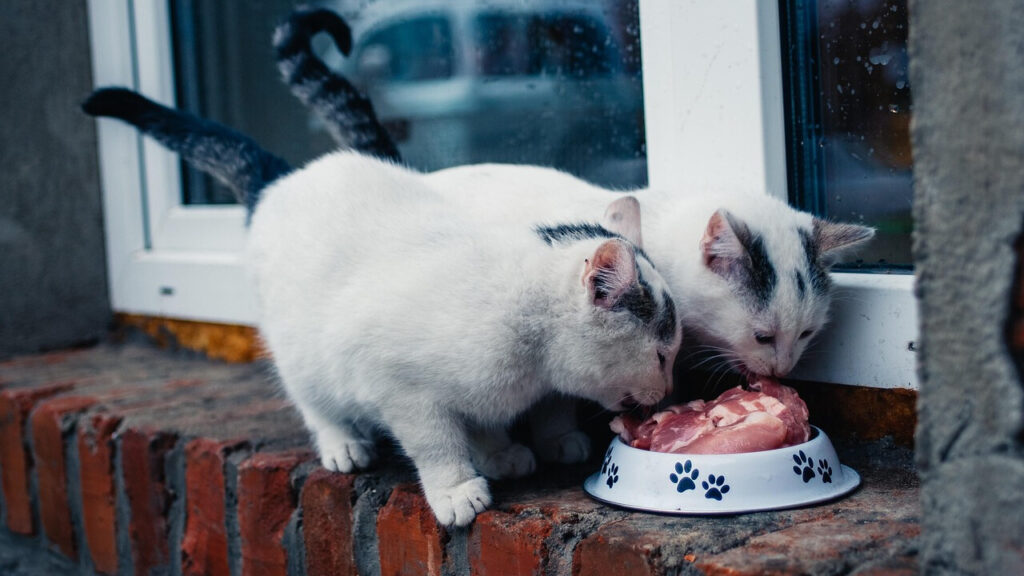
Cats are obligate carnivores, but that does not mean an unbalanced raw-meat diet is automatically healthy. Nutritional deficiencies and infectious risks affect both cats and people in the household.
Carnivore does not mean meat alone
Cats require taurine, arachidonic acid, specific vitamins, minerals and a correct calcium-to-phosphorus balance. Muscle meat by itself is incomplete. Homemade raw diets should only be used with a recipe formulated and maintained by a qualified veterinary nutritionist.
Infectious risks
Raw animal products may carry Salmonella, Campylobacter, pathogenic E. coli, parasites and antimicrobial-resistant bacteria. A cat can shed organisms without appearing ill, creating a risk for children, older adults, pregnant people and anyone who is immunocompromised.
Bones and preparation
Bones can fracture teeth, obstruct or injure the gastrointestinal tract. Freezing does not reliably remove all pathogens, and ordinary kitchen hygiene cannot make raw feeding risk-free.
What about perceived benefits?
Owners may report improved coat, stools or appetite, but similar goals can often be achieved with a complete cooked diet. Current evidence does not show that raw feeding provides health benefits that outweigh its established risks.
Conclusion
A cat can be fed a high-quality, meat-based diet without serving it raw. Nutritional completeness and safety are more important than whether a diet appears “natural”.
Kleine veranderingen eerder zien
Ontvang direct Pip's Senior Cat Check, twee korte welkomsttips en daarna ongeveer één keer per maand begrijpelijke kattenkennis van Pip en Marieke.
Pip’s Post wordt klaargezet. Inschrijven opent zodra de e-mailverbinding betrouwbaar is getest.